Choosing between an acrylic and glass display case can seem like a small detail until you start building a serious model car collection. Both materials can create a clear, protective enclosure, but they behave very differently in everyday use.
For most collectors, the decision comes down to five things: weight, scratch resistance, impact safety, optical presentation and how the case will be used. A lightweight wall display has different priorities from a heavy cabinet that will stay in one place for years.
Quick answer
Acrylic or glass: which is better for model cars?
For most single-car, multi-car and wall mounted model displays, acrylic is usually the more practical choice because it is lighter, more impact resistant and easier to manufacture in custom sizes. Glass remains attractive for collectors who prioritise scratch resistance, a heavier premium feel and a traditional cabinet-style display.
Acrylic vs glass display cases at a glance
| Factor | Acrylic | Glass |
|---|---|---|
| Weight | Much lighter for a comparable panel size | Heavier and more substantial |
| Impact resistance | High; less likely to shatter | Can chip or break under impact |
| Scratch resistance | More easily scratched | Generally more scratch resistant |
| Clarity | Excellent with quality clear acrylic | Excellent with good-quality glass |
| Custom sizing | Well suited to bespoke fabrication | Possible, but often heavier and more complex |
| Wall mounting | Usually easier because of lower weight | Requires more consideration of weight and fixings |
| Cleaning | Needs a soft cloth and acrylic-safe products | More tolerant of conventional glass cleaning |
| Overall feel | Modern, clean and lightweight | Traditional, solid and substantial |
Neither material is automatically “better” in every situation. The right choice depends on the collection, the room and how often the display will be handled.
What is an acrylic display case?
Acrylic is a clear thermoplastic commonly used for display covers, cabinets and protective enclosures. It is sometimes described by well-known trade names, but the important point for collectors is that quality clear acrylic can provide excellent visibility while weighing considerably less than an equivalent glass enclosure.
That combination makes acrylic particularly useful for model-car displays. A large cover can remain manageable to lift, wall mounted displays place less load on fixings, and manufacturers can fabricate a wide variety of sizes and shapes.
Acrylic also does not fracture in the same way as ordinary glass. It can still crack or be damaged, but it is far less likely to break into sharp shards if knocked.
What is a glass display case?
Glass has been used for cabinets and showcases for generations. It has a hard surface, feels substantial and is naturally resistant to the fine scratches that can gradually appear on poorly handled acrylic.
Many traditional collector cabinets use glass doors or glass shelves because the material creates a solid, furniture-like feel. For a large freestanding cabinet that is rarely moved, the extra weight may not be a problem at all.
However, once the display becomes wall mounted, oversized or designed around a removable cover, that extra weight becomes much more relevant.
Which gives the best optical clarity?
Both materials can be extremely clear when they are good quality, clean and correctly fabricated. For most model-car displays, the difference in day-to-day viewing is less important than panel thickness, edge finish, reflections, lighting and how clean the case is kept.
Acrylic has an advantage in that large panels can look very clean and almost disappear around the model when edges are polished and the design is minimal. Glass can look equally impressive, particularly when low-iron glass is used, although that is usually associated with higher-end specialist applications.
Collector tip
Lighting and background often matter more than the material
A dark or neutral base, clean panels and sensible lighting can have a bigger effect on presentation than choosing acrylic over glass. The case should frame the model rather than compete with it.
Which material is lighter?
Acrylic is significantly lighter than glass. For comparable sheet sizes and thicknesses, it is typically around half the weight of standard glass.
That matters more than it sounds. A lighter case is easier to move when cleaning, easier to lift away from a base and more practical for wall mounted collections. It can also make larger multi-car enclosures less awkward to handle.
For a single small display, the difference may not change your decision. For a large wall system or a case that is regularly moved, it can be one of the strongest reasons to choose acrylic.
Which is more scratch resistant?
Glass wins this category. Its harder surface generally copes better with routine wiping and accidental contact without developing fine marks.
Acrylic can scratch if it is wiped with a dirty cloth, paper towel or abrasive cleaner. That does not make it unsuitable for display use; it simply means the cleaning method matters more.
- Use a clean, soft microfibre cloth.
- Remove loose dust before wiping the surface.
- Avoid abrasive pads and household scouring products.
- Use a cleaner that is suitable for acrylic rather than assuming any glass cleaner is safe.
- Do not rub a dusty panel aggressively.
For more care advice, see our Complete Guide to Model Car Display Cases.
Which is safer if the case gets knocked?
Acrylic is generally the safer material in areas where accidental impact is realistic. It is more resistant to shattering, which can be useful in family homes, busy rooms, retail environments or anywhere a display is mounted above furniture.
Glass can be made safer through appropriate glass types and construction methods, but a glass display remains heavier and requires careful consideration of support, edges and fixing points.
Whichever material you choose, a wall mounted display should be installed with fixings suitable for the wall construction and the total loaded weight of the display.
Which is better for wall mounted model car displays?
For most collector applications, acrylic is the more practical material for wall displays. The lower weight reduces the overall load on the mounting system and makes removable covers easier to handle.
This is particularly useful with collections of 1:64 model cars, where a wall mounted case may contain many vehicles, or larger 1:18 models, where the enclosure itself can become physically substantial.
If wall space is central to your display plan, explore our Wall Mounted Car Displays.
Which is better for a freestanding cabinet?
This is where glass becomes more competitive. A heavy freestanding cabinet is normally supported by the floor or substantial furniture, so weight is less of a concern. Glass shelves and doors can deliver a traditional cabinet feel and excellent resistance to everyday surface marking.
Acrylic still works extremely well for freestanding cases, especially individual covers and modular displays. The choice here is more about the style of display you want than a clear practical winner.
Single feature model
Acrylic is usually ideal
Lightweight clear covers keep attention on the car and are easy to lift away when access is needed.
Large furniture cabinet
Glass can make sense
Weight is less important and the harder surface suits a permanent cabinet that is frequently cleaned.
Wall collection
Acrylic has the practical edge
Lower weight and impact resistance are valuable when multiple cars are displayed above floor level.
Bespoke dimensions
Acrylic is highly flexible
Custom fabrication makes it well suited to unusual models, large wings, plinths and collection-specific layouts.
Does acrylic or glass protect better from dust?
Material choice is not the deciding factor for dust. A well-designed acrylic case and a well-designed glass case can both provide excellent dust protection.
What matters is how well the panels meet, whether the cover sits correctly on its base, whether doors have large gaps and how often the display needs to be opened.
A sealed or close-fitting display reduces the amount of direct cleaning the model itself needs, which is particularly valuable for delicate mirrors, aerials, decals and exposed suspension parts.
What about UV protection?
This is one area where buyers should be careful with assumptions. Some specialist acrylic sheets are manufactured with strong UV-filtering properties, and specialist glazing products are also available in glass. But you should not assume that every clear acrylic or glass case automatically provides meaningful UV protection.
If UV performance matters because the collection sits near a bright window or contains sensitive paint, decals or packaging, check the actual material specification supplied by the case manufacturer.
For Case Your Space products, we will only state UV performance where that property has been specifically confirmed for the material used.
Which is easier to customise?
Acrylic is extremely well suited to custom display work. It can be cut, shaped, drilled, bonded and fabricated into covers, shelves, wall systems and custom enclosures without creating the same handling challenges as large glass panels.
That makes it a strong option for unusual model lengths, racing cars with oversized wings, vehicles displayed on manufacturer plinths or collectors who want a consistent system built around their available space.
If your model needs something outside a standard footprint, see our Custom Display Cases.
Which looks more premium?
This is mostly personal preference. Glass has a weight and solidity that many people associate with traditional furniture and museum cabinets. Acrylic can create a cleaner, more modern appearance because the panels and cover can feel visually lighter.
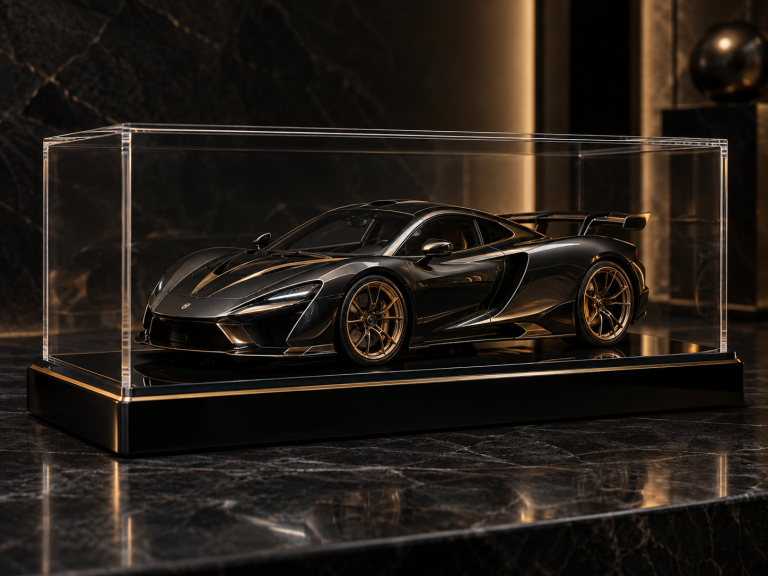
For model cars, a gloss or satin dark base with a clear acrylic cover is particularly effective because the enclosure almost disappears from normal viewing distance. The car remains the visual focus.
The quality of the fabrication matters more than the material name alone. Poor edges, visible adhesive marks, scratches or inconsistent panel alignment will make either material look cheaper.
Which costs more?
There is no universal answer because price depends on thickness, dimensions, fabrication, shipping, base design and whether the case is produced in standard or bespoke sizes.
Glass can become expensive and difficult to ship safely as sizes increase. Acrylic can also become costly when thicker sheets, complex machining or large bespoke fabrication are required.
Instead of comparing only the raw material, compare the finished case: usable internal size, quality of construction, access, weight, base design and how well it suits the model.
Which material is best for different model car scales?
The material does not need to change simply because the model scale changes, but the advantages become more or less important as the display grows.
1:64 collections
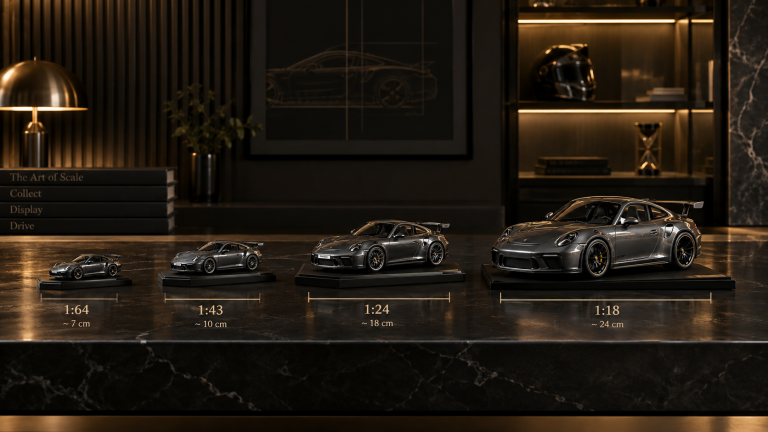
Acrylic works particularly well because many cars can be housed in one multi-car or wall mounted enclosure without the display becoming unnecessarily heavy. If you are planning a compact collection, read How Big Is a 1:64 Model Car?.
1:43 and 1:24 collections
Both materials can work well. These scales sit in the middle ground where single-car cases, shelves and cabinets are all realistic options.
1:18 collections
The larger case dimensions make acrylic’s weight advantage more noticeable. A removable acrylic cover is easier to handle than a comparable glass enclosure, particularly where the display is frequently accessed.
Our Model Car Scale Comparison Guide explains the space differences between the most common collector scales.
Frequently asked questions
Is acrylic as clear as glass?
High-quality clear acrylic can provide excellent optical clarity and is widely used for retail, museum and collector displays. In a model-car case, fabrication quality, cleanliness and reflections often have more effect on the viewing experience than the material alone.
Does acrylic scratch more easily than glass?
Yes. Acrylic is softer and generally more vulnerable to fine surface scratching. Proper cleaning with a soft microfibre cloth and suitable products helps preserve the finish.
Can acrylic display cases crack?
Yes. Acrylic is impact resistant rather than indestructible. Excessive force, incorrect drilling, stress around fixings or poor handling can still cause cracks.
Is glass better for expensive model cars?
Not automatically. The value of the model does not determine the best enclosure material. A well-made acrylic case can be an excellent choice for valuable models because it is clear, lightweight and protective. The design and fit of the case matter more.
Which is better around children or pets?
Acrylic is generally preferable where impact or accidental knocks are a concern because it is much less likely to shatter. The display should still be positioned securely and wall mounted units must be correctly fixed.
Does acrylic turn yellow?
Quality acrylic intended for display use can remain clear for many years, but long-term appearance depends on the grade of material, environmental exposure and care. Avoid making assumptions about UV stability unless the material specification confirms it.
Our recommendation for model car collectors
For most dedicated model-car displays, we favour acrylic. Its low weight, impact resistance, clean appearance and flexibility make it particularly well suited to individual cases, multi-car displays, wall mounted systems and bespoke collector layouts.
Glass remains a very good material where scratch resistance and a traditional heavy cabinet feel are priorities. If you already have a substantial glass cabinet that suits the room and collection, there is little reason to replace it simply because acrylic is available.
The best display case is ultimately the one that protects the collection, fits the available space and presents the cars without distracting from them.
Browse our Model Car Display Cases, explore Wall Mounted Car Displays, or start with our Complete Guide to Model Car Display Cases.